
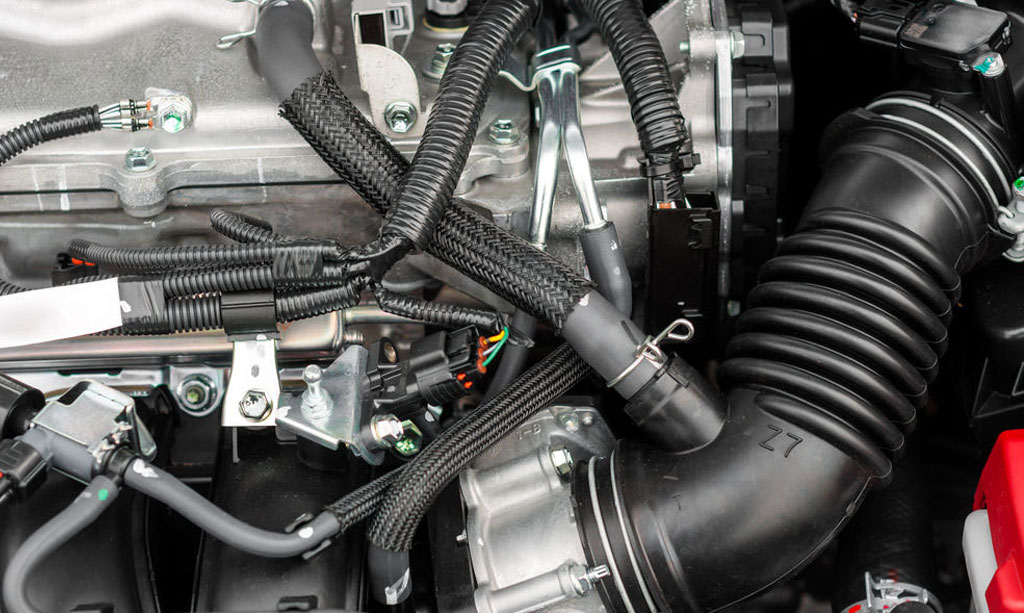
Belt and Hose Auto Maintenance Inspections and Replacement
Your car’s belts and hoses hold a very important job: enabling your car to run! If your belts and hoses are damaged, worn, or broken it could lead to engine overheating or a car that won’t run at all. We want to help you avoid having a disabled car and costly damages by providing you with belt and hose auto maintenance tips. Taking care of and regularly inspecting these parts will not only help your car run well, but also keep you safe on the road
Auto Belt Maintenance Tips
There are typically a few belts in your car that are necessary to your car running. This is because the belts control the running of components like the alternator, power steering, water pump, and AC compressor within your vehicle. Your vehicle’s belts are also responsible for the engine valves intake and exhaust timing. Without your belts, your car simply wouldn’t be able to run. Damaged, frayed, or cracked belts, while still enabling the car to run, won’t work efficiently and could cause your engine to overheat or loose power. Even if your car runs ok, there could be damage that’s taking a toll on your engine’s efficiency and overall health. Let’s take a look at each belt for a better understanding of how they work.
Serpentine/Accessory/Drive Belts: Your car will most likely have one or two of these belts. These are the belts that run around pulleys in your vehicle to enable the alternator, AC compressor, power steering pump, water pump, etc. A serpentine belt is called such because it “snakes” around multiple pulleys to transport power to the previously listed parts. Accessory and Drive Belts provide the same function of running the components, but in a slightly different way than serpentine belts.
Having these belts replaced every 60,000-100,000 miles and inspected every 10,000-20,000 miles is what’s recommended to keep you safe. Depending on your make and model, your Owner’s Manual might suggest something different, so make sure to check. There are signs you can look out for in between inspections and replacements to determine the health of your belts, which include:
- A completely disabled car
- A check-engine light on your dashboard
- Engine overheating
- Loss of power steering
- A high-pitched noise or squealing when pressing the gas pedal
Timing Belt: This belt controls the timing of valves opening and closing during the engine cylinder’s intake and exhaust strokes. The Timing Belt puts the rotation of the camshaft and crankshaft in-sync. This means the valves will open and close at the right time during the cylinder’s intake and exhaust strokes. Some cars, however, might have a timing chain, rather than a belt.
The recommended replacement service interval is every 60,000-100,000 miles, but again your Owner’s Manual might say something different depending on your make and model. Some signs you can look out for in between services include:
- Rattling noises coming from the front of the engine
- Squeaking from the timing cover
- Trouble starting the car
- A loss of oil pressure (because of camshaft pieces in the oil)
- A completely disabled car
Hose Maintenance Tips: It is recommended to have all of your hoses inspected on a regular basis. Hoses wear out over time and it is important to have them replaced as needed. This is particularly important for power steering hoses, radiator hoses, fuel hoses, and brake hoses
Power Steering Hoses: The power steering hoses hold, you guessed it, power steering fluid. This system is hydraulic, meaning the fluid is pressurized within the hoses. The hose’s function is to deliver power steering fluid to the power steering rack. This high-pressure hose is typically metal and delivers the fluid from the pump to the steering rack. The low-pressure hose delivers the fluid back from the rack to the pump, and is usually made of rubber. A damaged hose may cause steering difficulty, steering wheel vibrations when idling, leaking fluid under your car, or whining and squealing when turning the car. Our ASE Certified technicians would be happy to inspect your power steering hoses for cracks, leaks, and heavy wear.
Radiator Hoses: The radiator hoses throughout your engine serve one of the most important purposes: regulating your engines temperature. The coolant within the radiator hoses moves around the engine to help cool it down. Engine overheating is a serious problem and can cause major damage leading to costly repairs. These hoses are expected to last 5 years or longer, but again, having them regularly inspected is key. Even a tiny crack that doesn’t leak can eventually lead to a full-on leak or dump of coolant, leaving your car unable to run. If you have a leak already, you might experience engine overheating, a leak of brightly colored liquid under your car, smoking from the engine, or a drop in coolant level.
Fuel Hose: This hose is responsible for transferring fuel from your tank to your vehicle’s fuel pump, which ultimately makes your car run! Typically this hose is made of reinforced rubber, but sometimes metal. Metal fuel lines can take a heavy hit from snow and salt on winter roads. Rubber lines are subject to cracks and leaks, too, from wear over time. Signs that you might have a damaged fuel hose is smelling gasoline, seeing a visible puddle of gas under your car, having trouble starting your car, or your car won’t start at all. If you’re experiencing any of these symptoms, our technicians would be happy to check for you and replace the hose if necessary.
Brake Hose: This hose is another one that holds a pressurized, hydraulic fluid. The purpose of the hose is to transfer the brake fluid from the wheel cylinder to the calipers, which happens when you press the brake pedal to slow down or stop the car. These hoses can be rubber or steel. Many times rubber brakes are used because they provide more flexibility in suspension function. Again, having this hose replaced is not a part of routine maintenance, but should be inspected because of the important function it serves. Some signs your brake hose might have a crack or leak is mushy or soft brakes or loss of braking power completely.
If you are experiencing any fluid leaking or squealing noises when you start the vehicle, you will require immediate attention. Give Feldman Auto Center a call today at 812-663-2886 for a FREE belt and hose inspection.